When designing a wireless network, there are three things to keep in mind:
- Management
- Complexity
- Maintenance
These three things all create costs that drain a VAR’s bottom line. They’re inevitable because every network must be managed, each has a specific level of complexity, and every network requires maintenance at some point. The first and third (management and maintenance) are both directly proportional to the second (complexity); as complexity costs goes down, so do the other two. As the network’s complexity decreases with the installation of a Bountiful Wi-Fi network, the time required to manage and the effort to fix problems go down also.
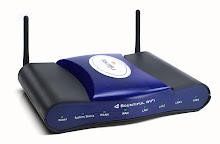
Bountiful Wi-Fi limits these issues with its simple, high-powered, centrally-managed network solution. The one Watt send/receive signal means less access points are needed to cover a given area; this, in turn, means the network is less complex, which leads to a network that is easier to manage. Also, with the central management, it can all be controlled remotely; a network in Nebraska can be serviced by a technician in Idaho, with no travel required.
If a network does require an actual visit, a tech can diagnose the issues, via the controller’s remote functionality, before leaving, or while travelling, so that the issues are known ahead of time and can be planned for. Thanks to the non-complexity of the network, maintenance can be performed quickly, saving time and stress.
Please visit http://www.bountifulwifi.com for more information.
Tuesday, June 1, 2010


Saturday, May 1, 2010
Healthcare “hearts” Bountiful Wi-Fi
A current trend in the healthcare industry is electronic records transferring. The ability to send records without a huge paper trail cuts down on costs like transporting, validation and time. Even within a single hospital complex, these can cost lives.
One of the barriers to creating an electronic transfer system is infrastructure. Will every room be wired? Will every physician and nurse need to carry a notebook computer to plug in, or will there be a computer station for each patient’s room? As the pile of questions grows ever-larger, the answer becomes clearer: wireless network. These types of systems have nothing to do with watching funny videos on YouTube, but have everything to do with saving lives and keeping track of patients’ records.
A Bountiful Wi-Fi wireless network will do the following for a healthcare facility:
- make records transferring immediate
- cut down on infrastructure costs
- simplify the installation of the wireless network
- decrease hardware upkeep costs
For those in the know, a Bountiful Wi-Fi controller – the brains of the network – offers the following features to aid in healthcare facilities:
- VPN
- Captive portal for individual username and password access
- Access restriction
- Firewall with rules
- NAT
- Configure up to four SSIDs
For more information, visit: http://www.bountifulwifi.com.
One of the barriers to creating an electronic transfer system is infrastructure. Will every room be wired? Will every physician and nurse need to carry a notebook computer to plug in, or will there be a computer station for each patient’s room? As the pile of questions grows ever-larger, the answer becomes clearer: wireless network. These types of systems have nothing to do with watching funny videos on YouTube, but have everything to do with saving lives and keeping track of patients’ records.
A Bountiful Wi-Fi wireless network will do the following for a healthcare facility:
- make records transferring immediate
- cut down on infrastructure costs
- simplify the installation of the wireless network
- decrease hardware upkeep costs
For those in the know, a Bountiful Wi-Fi controller – the brains of the network – offers the following features to aid in healthcare facilities:
- VPN
- Captive portal for individual username and password access
- Access restriction
- Firewall with rules
- NAT
- Configure up to four SSIDs
For more information, visit: http://www.bountifulwifi.com.
Thursday, April 1, 2010
Wi-Fi Security: Introductions
In this economy, protecting information has become an even more vital part of the stability of companies that want to avoid bankruptcy filings. That fact, combined with the ever-growing value of wireless connectivity in the workplace, is leading to an increased need for Wi-Fi security. For VARs and integrators that manage networks as well, this need is even greater as they try to monitor the equipment they install.
There are seemingly unlimited numbers of things (viruses, worms, malware, etc.) crawling around the Internet, just waiting to invade your computer. Most of these can be downloaded over Wi-Fi now, leaving your customers with very little protection. How can you prevent having to go and repair or replace equipment and computers that have been corrupted? The answer is to install a Bountiful Wi-Fi wireless network.
With a full array of Wi-Fi security features, including:
- WEP, WPA & WPA2 Encryption
- Firewall with rules
- NAT
- VPN
- Customizable splash page
- Secure Payment Gateway
- Much, much more
There are seemingly unlimited numbers of things (viruses, worms, malware, etc.) crawling around the Internet, just waiting to invade your computer. Most of these can be downloaded over Wi-Fi now, leaving your customers with very little protection. How can you prevent having to go and repair or replace equipment and computers that have been corrupted? The answer is to install a Bountiful Wi-Fi wireless network.
With a full array of Wi-Fi security features, including:
- WEP, WPA & WPA2 Encryption
- Firewall with rules
- NAT
- VPN
- Customizable splash page
- Secure Payment Gateway
- Much, much more
Monday, March 1, 2010
Hospitality and the required Wi-Fi value-add
"Value-add" is not really even the right phrase to use when talking about Wi-Fi and hospitality. Guests expect Internet access, and, more and more, they expect it to be wireless. Especially when guests are often there for work conferences, access to remote office servers and computers is a necessity.
Deploying a hotel-wide network can be tricky business; an over-abundance of walls, in addition to multiple stairwells and elevators, present challenges that don't exist in some other scenarios. Also, security enablement is essential for guests with sensitive materials to protect. And, of course, people want to be able to access all of their information wherever they are in a hotel or at a resort. The result can be a costly, extensive install.
Now, what if you could make that install more profitable by limiting the amount of hardware and shortening the install time without losing the high-quality features that are necessary for this type of job? Bountiful Wi-Fi makes that possible with its centrally-managed, high-powered, cost-efficient Wi-Fi equipment, featuring:
- Customizable splash page for guest login
- Captive portal
- 1 Watt access points that give you two to three times more coverage
- Centrally-managed system with remote administrative access via the Internet
- Firewall with rules
- Content filtering
- NAT
- VPN
- RADIUS authentication
- Much, much more
Go to www.bountifulwifi.com today for information on where to buy and for tips on installing a hotel network.
Deploying a hotel-wide network can be tricky business; an over-abundance of walls, in addition to multiple stairwells and elevators, present challenges that don't exist in some other scenarios. Also, security enablement is essential for guests with sensitive materials to protect. And, of course, people want to be able to access all of their information wherever they are in a hotel or at a resort. The result can be a costly, extensive install.
Now, what if you could make that install more profitable by limiting the amount of hardware and shortening the install time without losing the high-quality features that are necessary for this type of job? Bountiful Wi-Fi makes that possible with its centrally-managed, high-powered, cost-efficient Wi-Fi equipment, featuring:
- Customizable splash page for guest login
- Captive portal
- 1 Watt access points that give you two to three times more coverage
- Centrally-managed system with remote administrative access via the Internet
- Firewall with rules
- Content filtering
- NAT
- VPN
- RADIUS authentication
- Much, much more
Go to www.bountifulwifi.com today for information on where to buy and for tips on installing a hotel network.
Sunday, November 1, 2009
Wi-Fi and WiMAX, Part 2
As mentioned in the previous post, WiMAX has some issues to deal with before it becomes widespread. One of these issues is compatibility with current computers. For this issue, consider the following:
These two technologies are like two sides of the same coin. WiMAX sends a signal out that covers large areas, but doesn't have the penetration to go through walls. Wi-Fi is a local area connection (LAN) network which covers smaller areas well, but doesn't have the signal quality to cover large spaces. In order to successfully install a WiMAX network, each building needs a Wi-Fi receiver to send the signal within each building. Without them, network users will get little to no connectivity.
Additionally, security is an issue with WiMAX. Even if people are able to get onto the wide area network (WAN), there is a limited amount of security available to protect those users. This broad signal is open, which limits the amount of security allotted to protect users from viruses, malware and other virtual attacks. By connecting through a Bountiful Wi-Fi access point, users are protected by the robust security afforded through this virtual local area network (VLAN).
In summary, WiMAX alone is not the solution that some make it out to be, but with the addition of Bountiful Wi-Fi's high-powered wireless equipment, WiMAX can serve a great public need for widespread wireless coverage for businesses and homes around the world.
![Reblog this post [with Zemanta]](http://img.zemanta.com/reblog_e.png?x-id=3939902f-25f0-4d4f-ba46-2da60aa7722c)
These two technologies are like two sides of the same coin. WiMAX sends a signal out that covers large areas, but doesn't have the penetration to go through walls. Wi-Fi is a local area connection (LAN) network which covers smaller areas well, but doesn't have the signal quality to cover large spaces. In order to successfully install a WiMAX network, each building needs a Wi-Fi receiver to send the signal within each building. Without them, network users will get little to no connectivity.
Additionally, security is an issue with WiMAX. Even if people are able to get onto the wide area network (WAN), there is a limited amount of security available to protect those users. This broad signal is open, which limits the amount of security allotted to protect users from viruses, malware and other virtual attacks. By connecting through a Bountiful Wi-Fi access point, users are protected by the robust security afforded through this virtual local area network (VLAN).
In summary, WiMAX alone is not the solution that some make it out to be, but with the addition of Bountiful Wi-Fi's high-powered wireless equipment, WiMAX can serve a great public need for widespread wireless coverage for businesses and homes around the world.
Thursday, October 1, 2009
Wi-Fi and WiMAX, Part 1
Special Note: Make sure to tune in next month, where the discussion will continue on WiMAX, and how Bountiful Wi-Fi can help with the issues mentioned below.
The wireless industry keeps talking about "WiMAX." It's the newest craze in wireless technology, but it's not the only wireless solution. There's 3G (a wireless phone and Internet solution), but soon there's going to be 4G; there's also Wi-Fi, the big player in the wireless computer market.
There are several hurdles that WiMAX must jump over before it can be widely accepted and used. First, there are problems with laptops and desktop computers. Most are now equipped with Wi-Fi capabilities, which is NOT the same as WiMAX. Some say that WiMAX is Wi-Fi on steroids, which is pretty much false, because even if a person has a Wi-Fi card in their computer, they can't automatically get on a WiMAX network.
The phrase should be, "WiMAX is 'like' Wi-Fi on steroids"; it's like Wi-Fi in that it's wireless, but it's on a different signal, and the signal needs to be converted into a Wi-Fi band transmission before individual, Wi-Fi-enabled computers can use it.
Secondly, the door is wide open for new players to enter this market. Cellphones - they seem more favorable to 4G - and PCs - thoroughly grounded in Wi-Fi - don't seem super-enthused about the technology, so other groups (yet unknown) are free to come into this WiMAX space to take root.
The third strike against WiMAX is really the most powerful one, and it has to do with businesses. Will business owners be in favor of a nationwide wireless network that their employees can use anywhere? You would think the answer would be a resounding, “Yes!" Unfortunately for WiMAX, businesses like privacy, and there have been no mentions of security over a WiMAX network. The idea of the technology is for a widely broadcast, open network. Wi-Fi, on the other hand, has multiple encryption methods to protect users.
The Take-away
That's three strikes, WiMAX, but people are holding on to their dreams of nationwide wireless coverage. This year has been a critical developmental time for the idea of wide area coverage.
WiMAX may fail miserably for now, but may emerge as a viable solution in another three to five years. The country, right now, is too well-rooted in 3G and Wi-Fi as the preferred solutions for cellular phones and computers. The need for WiMAX is not where it needs to be; the solution is currently being covered well enough by the other two. It must offer a unique set of advantages before businesses will accept it as a standard.
![Reblog this post [with Zemanta]](http://img.zemanta.com/reblog_e.png?x-id=ef744c3c-fc27-48fd-a3b0-6098e408c121)
The wireless industry keeps talking about "WiMAX." It's the newest craze in wireless technology, but it's not the only wireless solution. There's 3G (a wireless phone and Internet solution), but soon there's going to be 4G; there's also Wi-Fi, the big player in the wireless computer market.
There are several hurdles that WiMAX must jump over before it can be widely accepted and used. First, there are problems with laptops and desktop computers. Most are now equipped with Wi-Fi capabilities, which is NOT the same as WiMAX. Some say that WiMAX is Wi-Fi on steroids, which is pretty much false, because even if a person has a Wi-Fi card in their computer, they can't automatically get on a WiMAX network.
The phrase should be, "WiMAX is 'like' Wi-Fi on steroids"; it's like Wi-Fi in that it's wireless, but it's on a different signal, and the signal needs to be converted into a Wi-Fi band transmission before individual, Wi-Fi-enabled computers can use it.
Secondly, the door is wide open for new players to enter this market. Cellphones - they seem more favorable to 4G - and PCs - thoroughly grounded in Wi-Fi - don't seem super-enthused about the technology, so other groups (yet unknown) are free to come into this WiMAX space to take root.
The third strike against WiMAX is really the most powerful one, and it has to do with businesses. Will business owners be in favor of a nationwide wireless network that their employees can use anywhere? You would think the answer would be a resounding, “Yes!" Unfortunately for WiMAX, businesses like privacy, and there have been no mentions of security over a WiMAX network. The idea of the technology is for a widely broadcast, open network. Wi-Fi, on the other hand, has multiple encryption methods to protect users.
The Take-away
That's three strikes, WiMAX, but people are holding on to their dreams of nationwide wireless coverage. This year has been a critical developmental time for the idea of wide area coverage.
WiMAX may fail miserably for now, but may emerge as a viable solution in another three to five years. The country, right now, is too well-rooted in 3G and Wi-Fi as the preferred solutions for cellular phones and computers. The need for WiMAX is not where it needs to be; the solution is currently being covered well enough by the other two. It must offer a unique set of advantages before businesses will accept it as a standard.
Tuesday, September 1, 2009
Wi-Fi on Steroids: What can 1 Watt do for you?
Consider the following comparison:
Most routers and access points put out a signal that's between 100 and 500mW. The signal strength of Bountiful® Wi-Fi's signature products is 1000mW; that's one full Watt of power! Plus, it isn't just the out-going signal strength that's blasted; the receive sensitivity is amplified to 1000mW, too!
With that kind of power, what could YOU do?
First of all, it means you will need less equipment to cover the same OR MORE area. For example:
- a two story, 7500 square foot house with ONE router or access point.
- a three story, 192 unit apartment building, leasing office and club house with 14 access points.
- send signal from one building to another up to a mile away.
Secondly, less equipment means you can spend less time maintaining an installed network and use that time to do other money-making jobs. It effectively boosts the return on your investment in time and money.
Also, if you manage the networks you install, Bountiful® Wi-Fi has the perfect solution for you: the controller. For any install with more than two access points, this manages everything from a central location. Just plug all of them in and the access controller will do the rest of the work setting up the access points. Then, this unique device will allow you to remotely monitor, control and change what you want to on the network. For more information on the BWRACWALL Series access controller, go to www.bountifulwifi.com.
In summary, Bountiful® Wi-Fi's powerful suite of 1 Watt products will allow YOU, the integrator or VAR, to:
- set up networks more quickly and with less hassle.
- monitor installed networks with ease from anywhere in the world.
- save money on equipment and installation time.
Most routers and access points put out a signal that's between 100 and 500mW. The signal strength of Bountiful® Wi-Fi's signature products is 1000mW; that's one full Watt of power! Plus, it isn't just the out-going signal strength that's blasted; the receive sensitivity is amplified to 1000mW, too!
With that kind of power, what could YOU do?
First of all, it means you will need less equipment to cover the same OR MORE area. For example:
- a two story, 7500 square foot house with ONE router or access point.
- a three story, 192 unit apartment building, leasing office and club house with 14 access points.
- send signal from one building to another up to a mile away.
Secondly, less equipment means you can spend less time maintaining an installed network and use that time to do other money-making jobs. It effectively boosts the return on your investment in time and money.
Also, if you manage the networks you install, Bountiful® Wi-Fi has the perfect solution for you: the controller. For any install with more than two access points, this manages everything from a central location. Just plug all of them in and the access controller will do the rest of the work setting up the access points. Then, this unique device will allow you to remotely monitor, control and change what you want to on the network. For more information on the BWRACWALL Series access controller, go to www.bountifulwifi.com.
In summary, Bountiful® Wi-Fi's powerful suite of 1 Watt products will allow YOU, the integrator or VAR, to:
- set up networks more quickly and with less hassle.
- monitor installed networks with ease from anywhere in the world.
- save money on equipment and installation time.
Subscribe to:
Posts (Atom)



 Posts
Posts

